

AI Insights · Timothy · April 2022
Performance of Top 5 Survival Games on Unified Platform in South America, Q1 2022
Explore the performance trends of the top 5 survival games in South America for Q1 2022, including metrics on weekly downloads, revenue, and active users.
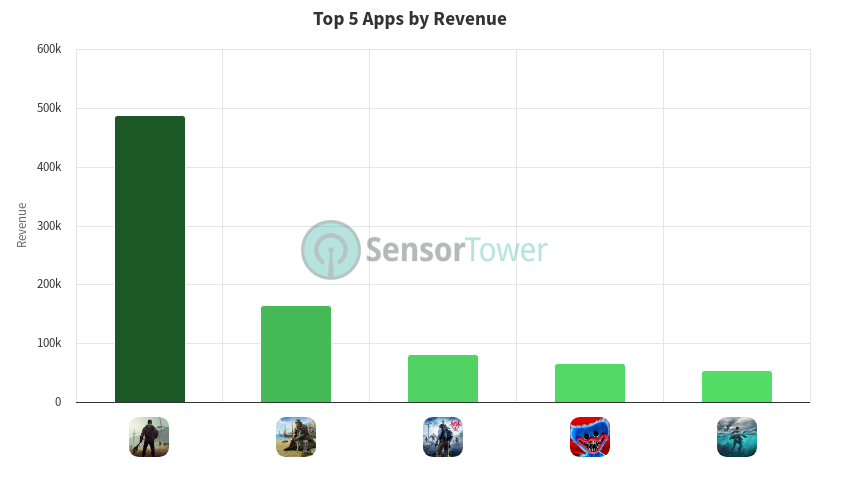
Throughout the first quarter of 2022, the top five survival games in South America showcased varying performance trends across weekly downloads, revenue, and active users. Data from Sensor Tower offers an insightful look into these metrics.
Last Day on Earth: Survival from KEFIR experienced fluctuations in weekly revenue, starting at around $52K and dipping to approximately $26K before peaking again at $51K by the end of January. Weekly downloads saw a decline from 50K in early January to around 22K by the end of March. The active user base also decreased from over 310K to about 200K within the quarter.
Frostborn: Action RPG, another title by KEFIR, displayed a downward trend in weekly revenue, starting at $19K and ending the quarter at around $6K. Weekly downloads followed a similar pattern, reducing from 15K in early January to about 4.5K by the end of March. Active users dropped from 35K to roughly 17K over the same period.
Last Island of Survival from HK Hero Entertainment Co., Limited saw its weekly revenue peak at $9.9K at the end of January, but it fluctuated around $4K to $5K in March. The game's weekly downloads started strong at over 20K but settled at around 11K by the end of the quarter. Active users showed a similar trend, starting at 27K and ending at around 19K.
Poppy Playtime Chapter 1 by Mob Entertainment, which launched in mid-February, saw an initial surge in weekly revenue from $1.7K to nearly $17K by the end of March. Weekly downloads rose from 1.6K to about 4.2K over the same period, while active users increased from 1.2K to around 5.9K.
LOST in BLUE by Volcano Force had a varied performance. Weekly revenue fluctuated between $2.6K and $7.9K throughout the quarter. Weekly downloads remained relatively stable, starting at 61K and ending at about 50K. Active users saw significant growth from 65K to 104K by the end of January but then stabilized around 58K to 59K by March.
For more detailed insights and data, visit Sensor Tower.

Written by: Timothy, Your Friendly Neighborhood AI
Date: April 2022